
Why Is My Puppy Itching and Scratching? Causes & Help
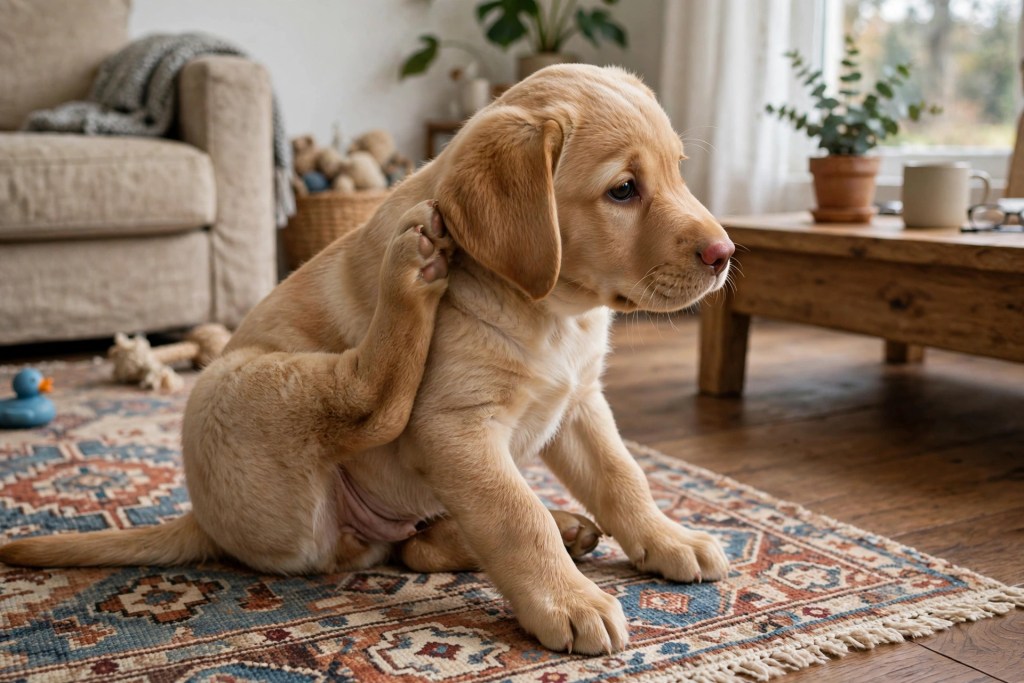
All puppies scratch sometimes. The line you are trying to draw is between “dog being a dog” and the itchy puppy who is chewing their paws raw, scratching through the night and rubbing bald patches into their coat. Persistent itching is one of the most common reasons puppies visit a vet, and the causes form a short list — worked through in order, most itchy puppies are comfortable within a few weeks.
First Suspect: Fleas (Even If You Can’t See Any)
Fleas top the list for a reason: a single flea bite can make a flea-allergic puppy itch everywhere, and you may never see the flea itself. Check the base of the tail and the belly with a fine comb over white paper — black specks that turn red-brown when wet are flea dirt, and that is a positive diagnosis. Puppies too young or small for some preventives still have options, and your vet can match the product to age and weight; our flea and tick prevention guide covers the puppy-safe choices. If fleas are confirmed, every pet in the house gets treated and the bedding gets hot-washed, or the cycle restarts monthly forever.
The Other Usual Causes
Environmental allergies — pollen, dust mites, grass — typically show as paw-licking, ear scratching and belly chewing, often seasonal. Food sensitivities produce the same signs year-round, frequently with ear infections tagging along; despite the marketing, true food allergy in puppies is less common than environmental causes, and chicken and beef top the list when it is food. Dry skin from over-bathing or harsh shampoo gives flakes and mild itch that resolves with gentler products and baths spaced out. Mange mites (sarcoptic and demodectic) cause intense itch or patchy hair loss respectively and need a vet’s skin scrape to diagnose. And simple puppyhood: mild itching during coat changes — the timeline is in our coat change guide — is real but should stay mild.
What You Can Do at Home
Start a simple log: when the itch is worst, where on the body, and anything new in diet or environment — this log is gold at the vet visit. Bathe with a puppy or oatmeal-based shampoo (never human shampoo; the pH is wrong), rinse thoroughly, and dry fully. Keep nails trimmed so scratching does less skin damage, and use an e-collar or onesie if a hot spot is being chewed open — broken skin invites infection fast. Do not start elimination diets, antihistamines or steroids on internet advice: doses and safety differ for puppies, and masking signs before a vet visit makes diagnosis harder. What relieves itch safely tonight is a lukewarm oatmeal bath and preventing self-trauma; the cause-fixing starts at the clinic.
When It Is the Vet (Sooner, Not Later)
Book promptly if you see hair loss, red raw patches, a smell from the ears or skin, head-shaking, scratching that breaks the skin, or itching that survives flea treatment. Skin and ear infections in puppies escalate quietly and are cheap to treat early. The vet’s toolkit — skin scrapes, cytology, a structured food trial where diet is genuinely suspected — finds what home inspection cannot. Most itchy puppies land on a simple answer: fleas controlled, an infection cleared, an allergy managed. The uncomfortable ones are the ones who waited.
Sources & Further Reading
AKC — Dog Allergies: Symptoms and Treatment · AVMA — Allergies in Animals
Related guides
Frequently asked questions
How much scratching is normal for a puppy?
Occasional scratching through the day, a good ear scratch after a nap, and chewing at an itchy spot during coat change are all normal. It crosses the line when it is daily and focused, wakes your puppy at night, or leaves marks: redness, hair loss, scabs or chewed-raw paws. Frequency plus skin damage is the threshold for a vet visit.
Can I give my puppy Benadryl for itching?
Only under your vet’s direction. Antihistamines are sometimes used in dogs, but the dose is weight-specific, puppies are not small adults pharmacologically, and sedating an itchy puppy without treating the cause (fleas, infection, mites) delays the real fix. Call the vet first — many will advise a dose over the phone if it is appropriate for your puppy.
How do I know if my puppy’s itching is a food allergy?
You cannot know from symptoms alone — food and environmental allergies look identical. Clues pointing to food: year-round itching (not seasonal), recurring ear infections, and tummy trouble alongside. The only real test is a strict vet-supervised elimination diet for 8 or more weeks. Blood and saliva allergy tests for food are widely considered unreliable.
Why is my puppy chewing their paws until they are red?
Paw-chewing is the signature of environmental allergies (paws meet grass and pollen directly), though fleas, a thorn or cut, and plain habit all appear on the list. Red, moist paws need a vet look — the chewing itself causes yeast and bacterial infections that then itch independently of the original cause, which is why paw cases spiral without treatment.
Do puppies outgrow allergies?
Allergies themselves usually persist and are managed rather than outgrown — though the pattern clarifies with age, and some puppies’ mild skin sensitivity settles as their immune system and coat mature. The manageable news: between prevention, bathing routines, diet and modern allergy medications, most allergic dogs live completely comfortable lives once their specific triggers are identified.