
Why Do Puppies Lick Their Paws? Causes & Fixes
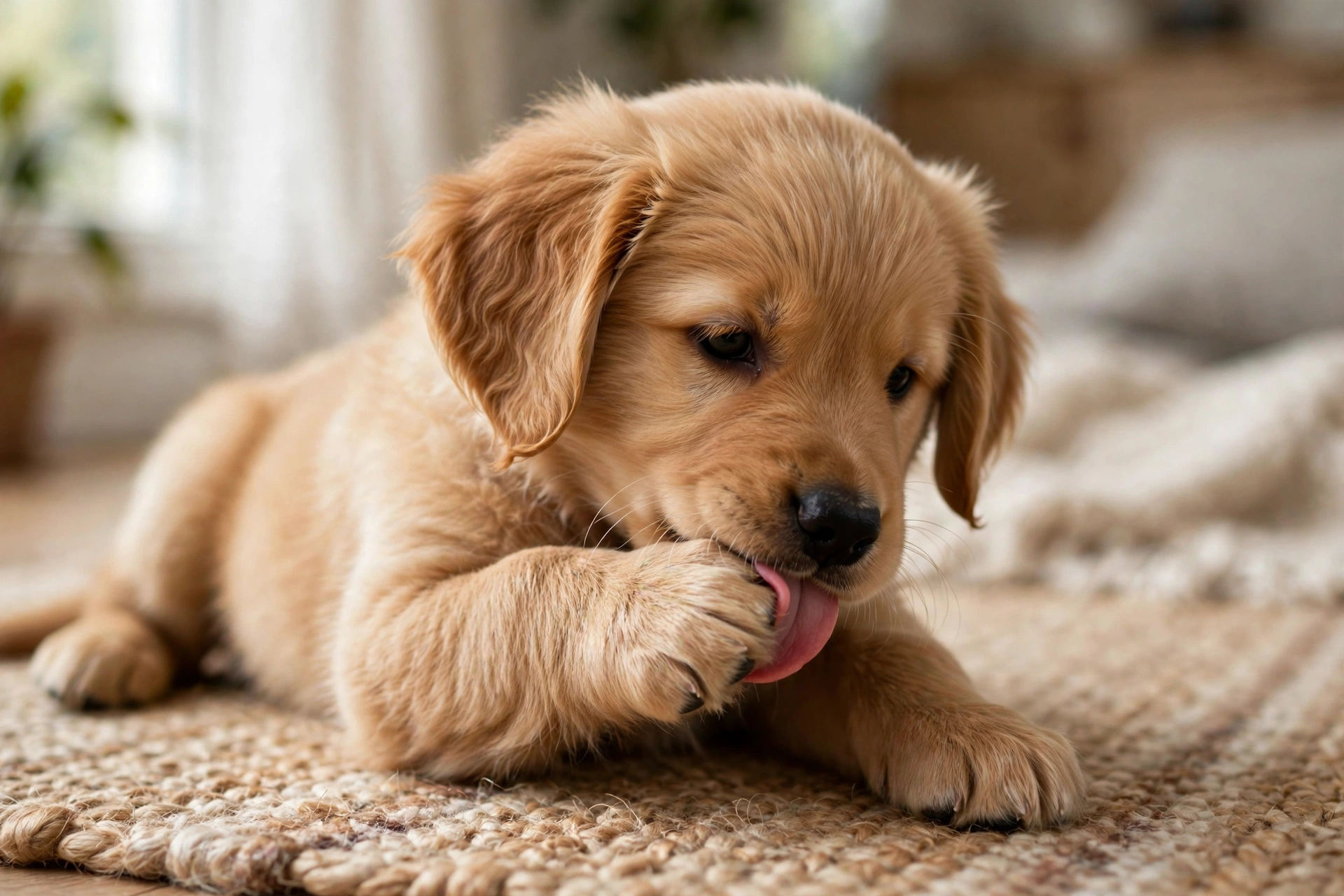
A puppy licking a paw now and then is grooming, no different from a cat’s tidy-up. A puppy who returns to the same paw every evening, whose white fur is turning rusty-red, or who chews between the toes until the skin is raw is telling you something — and paw licking is one of the most useful symptom clues a young dog gives, because the cause is usually findable. This guide works through the causes in the order owners actually meet them, from the harmless to the vet-worthy. (If your puppy licks everything — floors, furniture, you — that is a different pattern, covered in our guide to why puppies lick everything.)
The Innocent Causes: Grooming, Taste and Boredom
Puppies lick paws after walks (interesting smells live down there), after meals, and as a self-soothing wind-down before sleep. Boredom licking is the sneaky one: an under-stimulated puppy discovers that licking is mildly calming and always available, and a habit forms. The tell is timing — boredom licking happens in downtime, stops easily when you offer something better, and spreads across all four paws rather than fixating on one. The fix is upstream: more play, training games and chew outlets during the day, and a lick mat or frozen Kong offered at the exact hour the habit usually starts.
Allergies: The Most Common Medical Cause
When paw licking is persistent and seasonal, or year-round with ear scratching alongside, allergies lead the list — environmental (pollen, dust mites, grasses) more often than food in puppies. Allergic paws itch, the puppy licks, saliva stains light fur reddish-brown, and the moist skin between the toes invites yeast and bacterial infections that itch even more. Breaking that cycle needs a vet: the visit in our first vet visit guide is the template — describe when the licking happens and what changed. At home, wiping paws after outdoor time genuinely helps pollen cases, and keeping up flea prevention rules out the flea-allergy lookalike.
Injury and Irritation: Check the Paw Itself
Licking that fixates on ONE paw is a paw problem until proven otherwise. Spread the toes and look: grass seeds and tiny splinters lodge between toes, pads crack in winter salt and summer heat, nails tear, and interdigital cysts — red, swollen bumps between the toes — are a young-dog classic. A puppy who licks one paw and limps, or whose paw smells yeasty-sweet, skips the home-remedy stage and goes to the vet. Most single-paw causes are quick fixes once someone actually looks.
When Paw Licking Becomes a Vet Visit
Book the appointment when you see any of these: redness, swelling or sores; a musty odor from the feet; rusty staining spreading up the leg; limping; licking that cannot be interrupted with a game or treat; or a habit still going strong after two weeks of added exercise and enrichment. Take a short video of the behavior — puppies famously stop the moment the carrier appears — and note the pattern (after walks? at night? one paw or all four?). Pattern is diagnosis fuel, and it turns a vague complaint into a solvable problem.
Sources & Further Reading
AKC — Why Does My Dog Lick and Chew His Paws? · AVMA — Skin and Coat Care
Frequently Asked Questions
Is it normal for puppies to lick their paws?
Occasional licking is normal grooming and self-soothing, especially after walks and before sleep. It becomes a concern when it is constant, focused on one paw, hard to interrupt, or accompanied by redness, staining or odor — those patterns point to allergies, injury or a forming habit that needs attention.
Why are my puppy’s paws turning red or rusty-colored?
The rusty-red stain is saliva pigment on light fur — a sign of chronic licking rather than a disease itself. Red, inflamed skin between the toes usually means the lick-itch cycle has invited a yeast or bacterial infection. Both are vet-visit findings; the staining fades once the licking stops.
Can allergies really start in a puppy this young?
Yes. Environmental allergies commonly appear between six months and three years, and flea allergies can start with the very first flea season. Food allergies are less common in young puppies. A vet can distinguish them by pattern, season and response to simple first steps like paw wiping and flea control.
How do I stop my puppy licking their paws at night?
First rule out a medical cause if the licking is intense or one-pawed. For habit licking, move the last play and training session later, offer a lick mat or frozen chew at bedtime, and keep the sleep area boring. An e-collar is a short-term barrier only — it stops the tongue, not the reason.
Should I put anything on my puppy’s paws to stop licking?
Bitter sprays work for some puppies and are ignored by others, and they should never go on broken or inflamed skin. Booties or socks can protect a healing paw short-term. But products are a pause button, not a fix — persistent licking needs its cause found, which is a vet conversation.