
Sample Puppy Schedule: A Daily Routine by Age
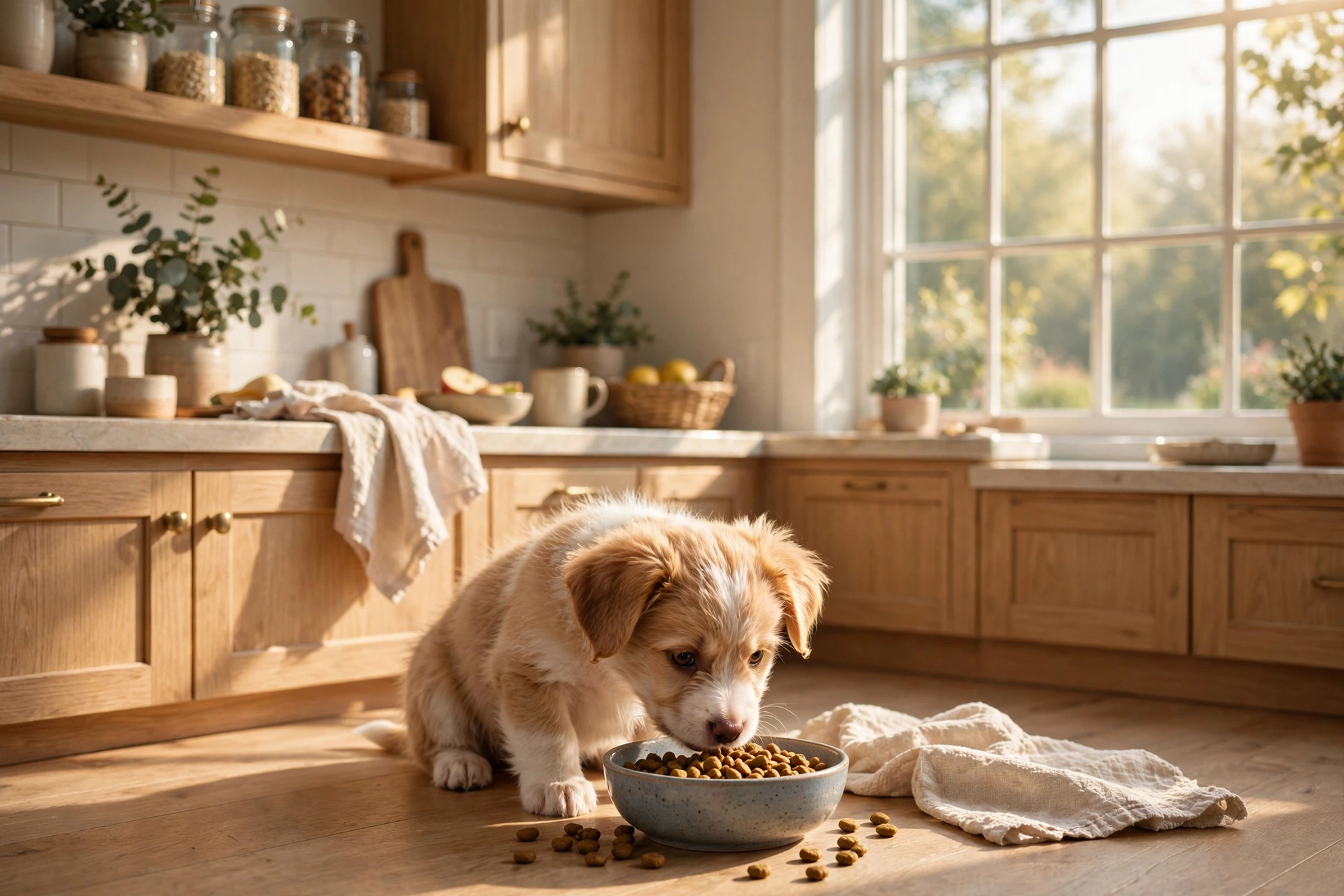
Puppies do not need a military timetable — they need a predictable rhythm, because a puppy who roughly knows what happens next is a puppy who housetrains fast, naps well and melts down less. The schedules below are templates, not laws: shift every time by an hour to fit your household and the structure still works. The non-negotiables hiding inside each day are sleep (18–20 hours for young puppies), toilet trips on waking, after meals and after play, and short training woven into ordinary moments. If you are in the very first week, pair this page with our printable first-week checklist.
The 8-Week-Old’s Day
6:30 Wake, toilet trip, breakfast. 7:00 Play and explore, toilet again. 7:30–9:30 Nap in the crate. 9:30 Wake, toilet, second small meal around 10. 10:30 Short play and a two-minute name game. 11:00–1:00 Nap. 1:00 Wake, toilet, third meal. 1:30 Socialization outing — being carried to watch the world. 2:00–4:00 Nap. 4:00 Wake, toilet, play. 5:00 Fourth meal. 5:30–7:00 The infamous evening zoomies window — supervise, toilet often. 7:00–9:30 Alternating short naps and gentle play, last meal long done. 9:30 Final toilet trip, settle. Expect one or two overnight toilet trips at this age. The nap architecture follows our puppy sleep schedule guide.
The 12-Week-Old’s Day
By 12 weeks most puppies consolidate to three meals and longer play windows. Wake at 6:30 for toilet and breakfast, a proper play-and-train block until 8:00, then a two-hour nap. Midday: toilet, lunch at 12:00, a short walk if vaccinations allow — the rules are in our puppy exercise guide — then another long nap. Evenings mirror the 8-week pattern with the last meal at 5:00–5:30 and lights-down by 9:30. Many puppies now sleep through with one overnight trip or none; if yours still wakes twice, nothing is wrong — bladders mature on their own schedule.
The 4 to 6-Month-Old’s Day
Adolescence approaches and the day stretches: two meals (morning and late afternoon), two real walks totaling the age-appropriate exercise, a midday nap that some puppies try to drop — keep offering it; overtired teenagers bite and bounce. Training sessions lengthen to five or ten minutes and can anchor the morning and evening. Build one daily “job” slot — a sniffy decompression walk, a puzzle feeder, or a proper game of tug with rules — and the evening restlessness that plagues this age noticeably fades.
How to Adapt the Template to Your Life
Shift the whole day, never the sequence: toilet-then-food-then-play-then-sleep is the engine, and it survives any start time. Work-from-home owners should deliberately practice alone-time inside the routine, or the schedule accidentally trains a puppy who cannot cope with an empty house. Weekends can flex by an hour without damage. And when the routine collapses — travel days, vet days, chaos days — just restart at the next anchor point instead of chasing the clock. Puppies forgive a messy day; what they cannot use is a messy week. Our new puppy checklist covers the gear that makes the routine run.
Frequently Asked Questions
How many hours a day should a puppy sleep?
Young puppies sleep 18 to 20 hours a day, and they need most of it — growth, brain development and emotional regulation all happen in sleep. By four to six months it drops toward 16 to 18 hours. A puppy who cannot settle is often an overtired puppy, not an under-exercised one.
What time should a puppy’s last meal be?
Late afternoon to early evening works best — around 5:00 to 6:00 p.m. in the sample schedules. An early last meal gives your puppy time to toilet before bed and reduces overnight accidents. Water can stay available a little later; lift it about an hour before bed if nights are still messy.
How often should I feed an 8-week-old puppy?
Four small meals a day is the standard for 8 to 12 weeks, dropping to three meals from about three to six months, and two meals after six months. Total daily amount comes from the food’s feeding guide adjusted for your puppy’s body condition — your vet fine-tunes it at each booster visit.
Does a puppy’s routine need to be the same every day?
The sequence matters more than the clock. Keep the order of events — wake, toilet, eat, play, sleep — and the day can flex an hour either way without any harm. Wildly different days back to back are what unsettle puppies, especially in the first month at home.
When can my puppy sleep through the night without a toilet trip?
Most puppies manage a full night somewhere between 12 and 16 weeks, though small breeds and individual puppies vary. Until then, set an alarm rather than waiting for crying — a calm, boring, lights-low toilet trip teaches nights are for sleeping faster than any other method.