
Best Puppy Travel Carriers for Car and Air Travel
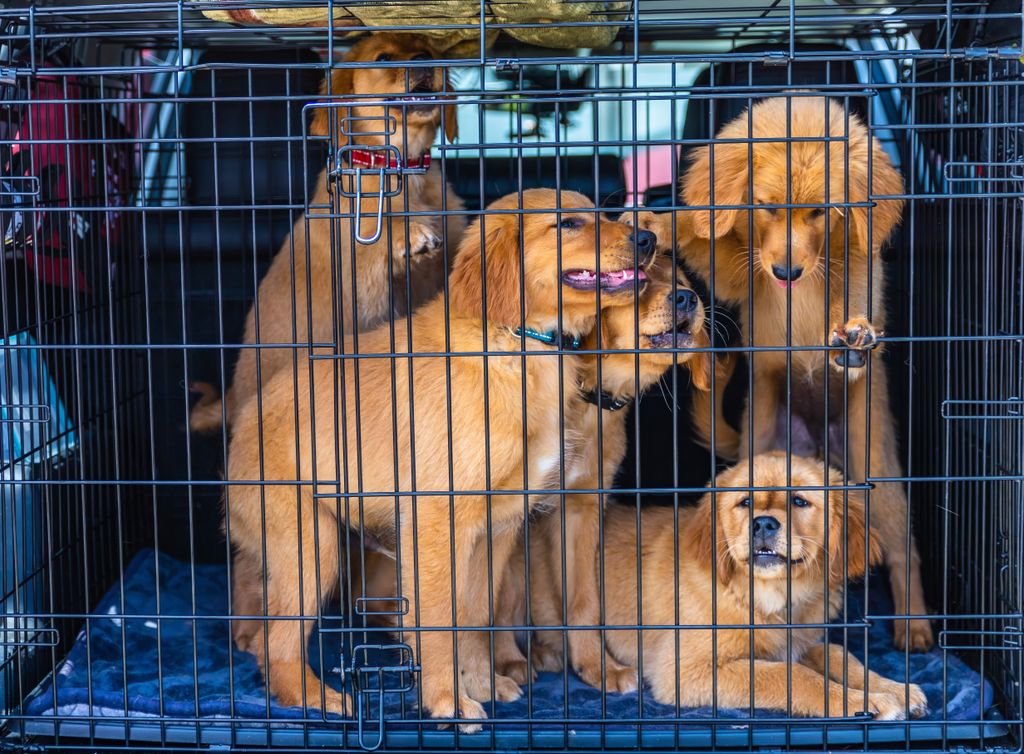
A travel carrier does three jobs at once: it keeps your puppy contained where cars and planes require it, it gives a nervous puppy a den to retreat into, and — sized and introduced right — it becomes the place your puppy chooses to nap for years. The buying trap is unique to puppies: the carrier that fits an eight-week-old will not fit the same dog at six months. This guide separates the two purchases most owners actually make — a small cabin or car carrier for the puppy months, and the question of whether you will eventually need a full-size travel crate — and picks the best carrier in each style. We do not print prices because they change constantly; check the current price before you buy.
Before any of it, read our guide to flying with a puppy for the airline rules that decide which carriers are even allowed on your flight. This page is about the gear.
Our top picks
Sherpa Original Deluxe — the cabin classic
The Sherpa Original Deluxe is the carrier that defined the category, and its party trick still matters: a patented spring-wire frame lets the back of the carrier compress a few inches to slide under an airline seat, then spring back to full height once you are settled. It is part of Sherpa’s Guaranteed On Board program, which covers the carrier on participating airlines when you register in advance — the closest thing to certainty this category offers. Mesh panels on multiple sides, top and side entry, locking zippers, a washable faux-lambskin liner, and a luggage strap that doubles as a seatbelt pass-through for car rides. The medium fits puppies up to about 16 pounds. For a first flight with a young puppy, this is the safest pick in the literal and figurative sense.
Mr. Peanut’s Gold Series Carrier — lightweight and airline-savvy
Mr. Peanut’s built its reputation on carriers designed around actual airline seat dimensions rather than hopeful approximations, and the Gold Series is their flagship soft-sided tote: airline-approved styling, mesh on multiple sides, a plywood base insert so the floor does not sag under the puppy, and a self-locking zipper. It is noticeably lighter than the Sherpa, which your shoulder will appreciate in a long terminal. The trade-off is structure — it is a softer bag, so a determined chewer or scratcher will test it harder, and it offers less protection if something is stacked on it. For calm to normal puppies on cabin flights, it is an excellent, travel-agent-grade choice.
Sleepypod Air — the crash-tested premium pick
Sleepypod is the pick for owners who think about the car ride as much as the flight. The company’s carriers are independently crash-tested, and the Air model compresses lengthwise to fit varying under-seat footprints, then expands to full size at your destination, where it converts into a bed — a genuinely useful trick that means one less thing to pack. In the car it secures with a seatbelt. It fits pets up to about 18 pounds and is the most expensive carrier in this roundup by a wide margin. Buy it if you travel constantly, or if crash-test certification is the feature that lets you relax. For occasional trips, the Sherpa does the same job for much less.
PetAmi Premium Pet Carrier Backpack — the hands-free pick
Not every trip is a flight. For vet visits, apartment buildings, crowded sidewalks, and puppies who must not touch the ground before their vaccines are complete, a backpack carrier keeps the puppy close and your hands free. The PetAmi Premium is the well-built version of the idea: structured sides so it does not collapse onto the puppy, mesh ventilation on all sides, a safety tether inside, padded straps, and storage pockets. It suits puppies up to roughly 18 pounds, which is also its limit — this is a puppy-months tool, not a carrier your adult dog will use. Puppies generally accept it fast because they ride against your chest, where they wanted to be anyway. Pair it with the ground-avoidance logic in our puppy vaccination schedule for pre-vaccine outings.
Petmate Sky Kennel — the cargo and big-trip pick
If your puppy will ever fly cargo — because of size, route, or airline rules — this is the kennel the system is built around. The Sky Kennel is a hard plastic, IATA-style travel kennel with a steel door, ventilation on all sides, and the “Live Animal” labeling airlines expect; it is what our puppy crate guide would call the plastic kennel taken seriously. It doubles as a sturdy car crate and a travel-safe sleeping crate at your destination. The honest downsides: it is bulky, it is not a cozy den without added bedding, and young puppies should never be put in cargo casually — talk to your vet and your airline first, and read the cargo cautions in our flying guide. For the right trip, there is no substitute.
What to look for
Size: measure the puppy, then check the trip date
Carrier sizes are given as pet length and height, not the bag’s outer dimensions. Measure your puppy from nose to base of tail and from floor to top of shoulders, then add a few inches — the puppy must be able to stand, turn, and lie stretched out. Then do the step most owners skip: check your trip date against your puppy’s growth curve. A carrier bought for a flight six weeks away should be sized for the puppy on flight day, not the puppy on purchase day. Our puppy growth charts will help you estimate where your puppy will be.
Airline rules beat product labels
“Airline approved” is a design claim, not a boarding pass. Every airline publishes its own maximum under-seat dimensions and pet weight limit, and they differ. The carrier must fit your airline’s numbers, your puppy must be at least eight to ten weeks old (airlines set the floor), and cabin pet spots are limited per flight — reserve the pet spot when you book your ticket, not at the airport. Weight limits usually count puppy plus carrier, which is why the lightweight picks above exist.
Ventilation, entry, and escape-proofing
Look for mesh on at least two, ideally three or four sides — a puppy regulates temperature poorly and a stuffy carrier gets hot fast. Top entry is far easier for loading a reluctant puppy than pushing one in through the front; side entry helps at the destination. Zippers should lock or clip closed: puppies learn zipper mechanics with terrifying speed, and an interior safety tether that clips to a harness (not a collar) is the backup that keeps a popped zipper from becoming a lost puppy.
Car safety is a separate feature
A cabin carrier is not automatically a safe car carrier. For car travel you want a seatbelt strap or pass-through to keep the carrier from becoming a projectile, a rigid base, and ideally independent crash testing — which is currently rare enough to be a headline feature (Sleepypod). At minimum, wedge or belt the carrier so it cannot slide. If your puppy gets carsick, a carrier that contains the mess and washes easily jumps to the top of the list — see our guide to puppy car sickness for the training side of that problem, and our roundup of the best car seats for puppies for booster-style alternatives.
Frequently asked questions
Can my puppy fly in the cabin with me?
Usually yes, if the puppy plus carrier fits your airline’s size and weight limits, the puppy is old enough (typically eight to ten weeks minimum), and you reserved one of the limited cabin pet spots in advance and paid the pet fee. The full rule rundown, including health certificates, is in our guide to flying with a puppy.
Should I buy a carrier my puppy will grow into?
For car and home use, a bigger carrier is fine — you can block off space with a box or divider, the same trick used in crate sizing. For flights, no: an oversized carrier that does not fit under the seat is simply not allowed, and an airline measuring at the gate will not care that your puppy will grow into it. Buy the cabin carrier for the size your puppy is on travel day, and expect a small-puppy carrier to be a temporary purchase for large breeds.
How do I get my puppy used to the carrier before the trip?
Leave the carrier open on the floor at least a week ahead, bedding inside, and feed meals and high-value treats in it with the door open. Once the puppy walks in voluntarily, close the door for seconds, then minutes, then lift and carry the carrier around the house, then take short car rides that end somewhere pleasant. Never make the first close-the-door moment the trip itself. This is the same gradual logic as our first road trip guide — boring practice runs are what make travel day uneventful.
Are backpack carriers safe for puppies?
Yes, for short periods, with a structured backpack that supports the puppy’s spine in a seated or lying position (not dangling by the legs), good ventilation, and a tether. Keep sessions short, watch for overheating, and stop using it when your puppy approaches the weight limit — backpacks are a small-puppy tool. They shine before vaccines are complete, when paws should not touch public ground.
Soft carrier or hard kennel: which should I buy first?
For most puppy owners, the soft cabin-style carrier first — it covers flights, car rides, vet trips, and hotel stays, and doubles as a portable den. Add the hard kennel only if cargo travel, a destructive chewer, or airline cargo rules enter your life. If your puppy will mostly travel by car and you want one purchase that lasts to adulthood, size a hard travel kennel for the adult dog and block off the extra space while they grow.