
Best Puppy Breeds for Hot Climates: Heat-Smart Picks
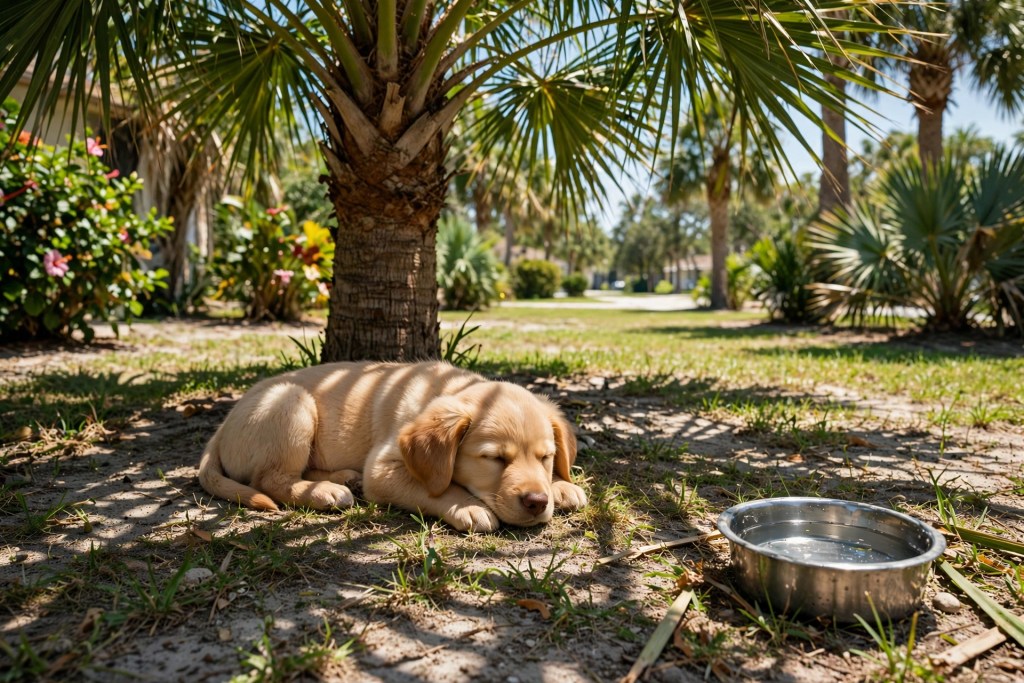
Choosing a puppy in a hot climate is a decision your dog lives inside of for fifteen summers. Heat tolerance is not one trait but a stack — coat, muzzle shape, size, energy style — and the breeds below stack it well. This is the mirror of our cold-weather list: where those breeds hoard warmth, these are built to shed it. And since every puppy overheats faster than an adult dog regardless of breed, the management rules at the end matter as much as the pick.
What Makes a Breed Heat-Tolerant
Four things count. Short, single coats (double coats insulate against heat leaving as well as cold arriving). Long muzzles — flat faces cannot pant efficiently, which is why brachycephalic breeds are the highest-risk group in heat, full stop. Lean or small builds, which dump heat faster than bulk. And a sensible energy style: every breed needs exercise, but breeds content with dawn-and-dusk activity patterns suffer less in a climate where noon is off-limits half the year. Desert and Mediterranean origins are the honest shortcut — breeds shaped by hot places arrive pre-adapted.
The Picks
Italian Greyhound — a whippet shrunk to lap size: nearly naked coat, zero cold tolerance, and total heat contentment; the full profile is in our Italian Greyhound puppy guide. Whippet — the same engineering at medium size, with an off-switch indoors that hot-climate owners worship: see our Whippet puppy guide. Basenji — a short-coated African breed, cat-clean, heat-built; independent-minded, so read our Basenji puppy guide before falling. Chihuahua — Mexican heritage, tiny heat load, and perfectly happy with dawn patrols: our Chihuahua puppy guide. Dalmatian — a coach dog bred to run in Mediterranean sun; high energy, so the exercise itself must be scheduled at cool hours (our Dalmatian puppy guide). Vizsla — Hungary’s short-coated pointer, a velcro athlete for owners who hike at sunrise: our Vizsla puppy guide. Rat Terrier — an American farm breed raised in Southern heat, sturdy and sensible (our Rat Terrier puppy guide). And Xoloitzcuintli — the hairless Mexican breed, the most literal heat adaptation on the list; sunscreen becomes part of the routine, per our Xolo puppy guide. Compare any two head-to-head in our breed comparisons, or let the Breed Picker Quiz weigh climate alongside your other answers.
Think Twice in Serious Heat
The caution list is about workload, not worthiness: heavy double coats (Husky, Samoyed — our Samoyed guide covers warm-climate management honestly, because people do keep them in Florida, with AC doing heavy lifting), giant heavy breeds, and above all flat faces — Pugs, Bulldogs, French Bulldogs — whose breathing is already compromised before the thermometer speaks. These dogs can live in hot climates with air conditioning, shaded yards, cool-hour exercise and vigilant owners; what they cannot do is live the same outdoor life as the breeds above. Decide which life you are actually offering before the puppy is chosen, not after.
Managing Any Puppy in the Heat
Whatever you bring home: walks happen at dawn and dusk, asphalt gets the back-of-the-hand test (if it is too hot for your hand, it burns pads), water and shade are constants, and no puppy waits in a parked car, ever. Watch for the overheating sequence — frantic panting, thick saliva, wobbliness — and treat it as the emergency it is: shade, cool (not ice) water on the body, vet. Puppies earn their heat tolerance gradually through their first summer; the breed gives them the equipment, and your schedule keeps them safe while they learn to use it. Choose from the top of this list and a Florida or Texas summer becomes the season your dog was, quite literally, made for.
Frequently asked questions
What is the best puppy breed for hot weather?
For most families, Whippets and Italian Greyhounds are the easiest heat answers: short single coats, lean builds and calm indoor manners. Chihuahuas suit apartment life in hot cities, and Basenjis and Xolos bring genuine desert heritage. The right pick still depends on your energy level and space — heat tolerance is one column in the decision, not the whole table.
Can double-coated breeds live in hot climates like Florida?
Yes, with management: air conditioning, shade, cool-hour exercise, and never shaving the coat down (it regulates more than it suffocates, and shaving can damage it permanently). Huskies and Samoyeds live in Florida by the thousand. But be honest about the workload — you are committing to a decade and a half of heat discipline that a short-coated breed simply does not require.
Are flat-faced breeds OK in the heat?
They are the highest-risk group in hot weather, because short airways pant inefficiently — and panting is a dog’s only cooling system. Pugs, Bulldogs and French Bulldogs in hot climates need AC-centric lives, minimal midday exposure and owners who treat heat as a medical risk. Many devoted owners do it successfully; nobody should choose one for an outdoor-heavy lifestyle in a hot state.
How hot is too hot to walk a puppy?
Use the pavement test and the puppy: if asphalt is too hot for the back of your hand after 5 seconds, it burns pads. Air temperature above the high 80s Fahrenheit makes midday exercise risky for puppies, who overheat faster than adults. Dawn and dusk walks, grass routes and shade breaks are the summer standard — and any frantic panting means stop, shade, water, home.
Should I shave my puppy for summer?
For double-coated breeds, no — the coat insulates both ways and protects from sunburn, and shaving can permanently change its texture. For single-coated breeds that are normally clipped (like Poodles), a summer trim is fine and normal grooming. When in doubt, ask your vet or groomer about your specific coat; the answer is breed-dependent, and ‘shorter is cooler’ is not universally true.